Flock Safety will require all of its customers to adopt an "Audit Assistance" feature to track abnormal uses. The company says it will also hold licence plate data for only seven days in most cases.
US Customs and Border Protection officers have misused surveillance databases to spy on family members, pursue dates and pass intelligence to drug traffickers. Freedom of Information records reveal staff abused systems drawing on facial recognition, licence plate readers and mobile phone location data across 300 incidents. Dozens of cases were referred to criminal investigators, though many claims were handled internally as minor misconduct or left uninvestigated. The agency said it takes misconduct allegations seriously and takes appropriate disciplinary action to hold itself accountable.
At least six police forces have used Palantir’s data analytics software under contracts worth £7.8m. The findings come from a joint investigation by Computer Weekly and the Good Law Project. Several other forces are also believed to have access to the software through regional taskforces.
A new tool called Slop or Not detects artificial intelligence text and images on Apple devices. The application runs entirely offline on iPhones and Macs without requiring an account. It uses on-device models powered by the Apple Neural Engine to identify AI-generated content.
The Supreme Court is to hear a legal challenge over whether Delhi Police can use facial recognition on protesters. Member of Parliament A A Rahim has submitted a plea challenging the collection and sharing of biometric data from demonstrators. The legal challenge cites the Supreme Court's previous right-to-privacy judgment.
The Supreme Court agreed on Thursday to examine whether the Delhi Police have legal backing to use facial recognition technology. The court will look into the force's use of biometric surveillance to monitor protesters at Jantar Mantar.
A Berlin-based non-profit organisation has filed a criminal complaint in Germany seeking a ban on Meta's smart glasses. Campaign group HateAid claims selling the devices is a criminal offence because they allow wearers to covertly film people without consent. The legal action targets Meta, eyewear brands Ray-Ban and Oakley, and several retailers for breaching German data protection laws. Meta said the glasses were approved by Germany's regulator in 2022 and feature privacy safeguards, including an LED recording light. European privacy regulators are due to finalise a report on smart glasses this summer.
Booksellers suspect artificial intelligence companies are buying and destroying rare books to train their models on high-quality text. The cheapest and fastest way to scan books involves cutting their spines, scanning the detached pages, and discarding them. Book lovers fear this practice is widespread and will lead to rare physical copies being lost forever. Non-destructive scanning methods exist, such as a process patented by Google in 2009, but tech firms often avoid them due to higher costs and slower speeds. Alternative techniques can also produce glitches, including distorted text and images obscured by workers' hands.
The Supreme Court will examine the legality of Delhi Police using facial recognition and biometric surveillance against protesters. The court cited potential privacy violations.
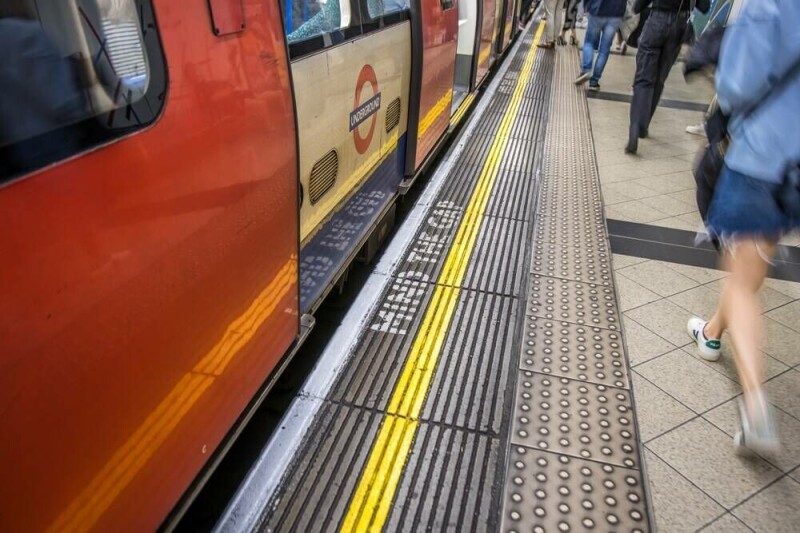
Transport for London is running a trial of live facial recognition cameras on the London Underground. Big Brother Watch director Silkie Carlo described the move as a disturbing and dystopian expansion of the technology. She said the cameras will capture the faces of millions of innocent people.
The Metropolitan Police are understood to be planning to use live facial recognition technology on London’s Oxford Street. Sadiq Khan has indicated the deployment will go ahead on Britain’s busiest shopping street. The move comes despite human rights concerns.
British Transport Police is expanding a trial of live facial recognition technology to the London Underground, beginning at Victoria station. The system scans faces in a camera's field of view and compares them against a police watchlist to alert officers. Police are using the NEC NeoFace M40 algorithm to assess how the technology performs in different transport settings before the trial ends in November. Critics and privacy campaigners describe the technology as intrusive, warning that errors have already led to innocent people being detained. They also highlight that members of ethnic minorities appear to be at greater risk of being misidentified by facial algorithms.
Permanent live facial recognition cameras will be used on Oxford Street to scan shoppers and tourists for wanted suspects. Sir Sadiq Khan indicated the newly pedestrianised area will be included in a technology expansion by the Metropolitan Police. The system scans the faces of people passing by and compares them with a watchlist. Cameras are likely to be attached to street furniture such as lampposts, rather than deployed on temporary police vans.
Licence plate readers such as Flock cameras are being targeted for vandalism around Metro Detroit. The devices use artificial intelligence to snap photos of all passing vehicles. They then catalogue details including licence plates, vehicle makes and models.
Hyderabad Police have used facial recognition technology to help identify eight people with previous criminal records. Officers detained 116 suspicious individuals during the Lal Darwaza Bonalu celebrations. The detentions took place on 9 and 10 August.
Flock AI surveillance cameras misread licence plates more than 70 per cent of the time, according to a new study. The errors lead to false police alerts involving innocent drivers.
Western Australia Police started a five-month trial in June using marked vans mounted with cameras. The vehicles scanned people's faces in real time. The police then matched the scanned faces against a watchlist of about 4,000 people.
Local police are pushing to use autonomous drones. The move comes amid viral resistance to mass surveillance from licence plate-reading cameras. Residents across the country are filling city council meetings to demand restrictions.
A senior Derbyshire detective is under investigation over potential gross misconduct linked to artificial intelligence. Separately, a member of staff at Gloucestershire police has been dismissed for the unauthorised use of ChatGPT.
Western Railway plans to use artificial intelligence, CCTV and NATGRID in Gujarat to improve passenger safety. The technology will help speed up e-FIRs. It will also help combat theft and drug trafficking.
A hacker has revealed that printing "adversarial patterns" on everyday clothing can poison facial recognition algorithms. The method was presented at Black Hat. It achieves this without using any masks or electronics.
A Welsh learner says she was left devastated after judges at the National Eisteddfod accused her of using artificial intelligence to write her novel. Romy Wood denied using AI for her entry, Y Dderwen, which she submitted under a pseudonym for the Daniel Owen Memorial Prize. Judge Meinir Wyn Edwards had claimed during a ceremony that clumsy expression in the text made judges suspect an AI machine created it. The independent adjudicators later said they were deeply sorry to have caused distress to the author.
Philippi East is to receive artificial intelligence analytics, facial-recognition cameras and drone support under a new crime project. The initiative, which is being led by a Chamber, will also deploy number-plate recognition technology in the area.
Devon and Cornwall Police will use live facial recognition technology for the first time to coincide with the Boardmasters Festival. The force has defended its use of the technology.
More than 50 offending image and video adverts have been published across Facebook, Instagram, Messenger and Threads. Data from Meta's ad library shows that some of these adverts ran as recently as this week.
Devon and Cornwall Police will use live facial recognition technology for the first time at the Boardmasters Festival in Newquay this weekend. A police van fitted with a biometric camera will scan passers-by against a watchlist of thousands of wanted individuals and known criminals. Six officers will staff the unit near the stage during the three-day event, which is expected to attract 50,000 people. The force insists the system is being used to keep attendees safe rather than for mass surveillance or mass data capture.
Artificial intelligence company Anthropic destructively scanned books to gather training data, according to court documents in the case *Bartz v Anthropic*. The firm apparently chose this method because it found destroying the books easier than dealing with copyright issues.
Mysuru Police is set to install 400 AI-enabled cameras across state and national highways in the district. The ₹5 crore project will track traffic violations and read number plates.